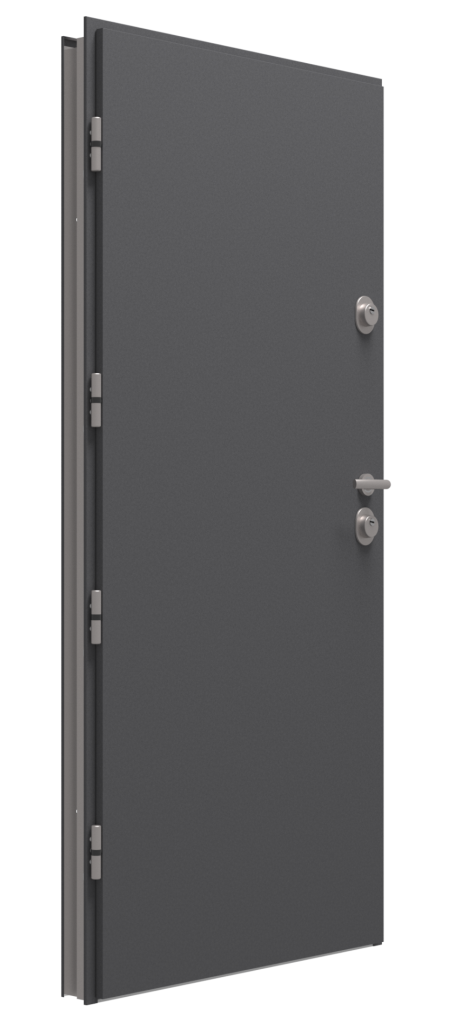
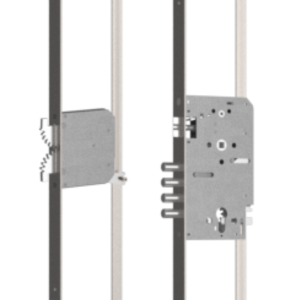
 5-point bolt-and-
hook lock
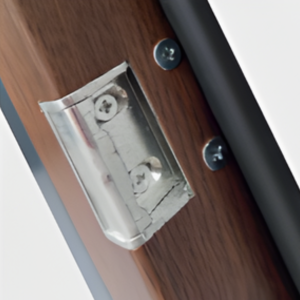 Pressure adjustment
 Filling: DELTA WKW
acoustic panel
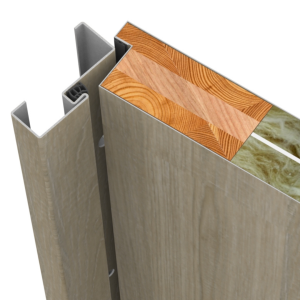 STIFFENING FRAME
made of glued wood


Leaf thickness

Leaf in bottom-rebate
-free technology

Burglary resistance classes (RC – Resistance Class)
determine how effectively a door protects against an intruder's
attempt to break in.
It is a standardized system used across Europe that allows for
an assessment of the types of tools a burglar might use and
how long the structure can resist.
The higher the class, the higher the level of security and
the longer the protection time.
RC2 – protect the room for at least 3 minutes against an
opportunistic burglar equipped only with a screwdriver,
a hammer, or pliers.
RC3 – protects the room for at least 5 minutes against
an experienced burglar equipped with a steel crowbar,
screwdrivers, a hammer, a mechanical drill, and wedges.
RC4 – protect for at least 10 minutes against a burglar
equipped additionally (besides RC3 class tools) with a
heavy hammer, a saw, a chisel, a gouge, and an axe.

The acoustic insulation level determines how
effectively the door muffles sounds coming from
the outside. It is a standardized parameter used
across Europe that allows for an assessment
of how much the construction limits noise
penetration — including conversations, traffic,
and the sounds of everyday building use.
The higher the insulation value, the greater the
acoustic comfort inside the room and the more
effective the isolation from unwanted sounds.
low: 27-32 dB
good: 33-37 dB
high: 38-42 dB
v. high: 43-48 dB
(each 3 dB represents approximately 100% better insulation)

The Ud parameter determines how well a door
retains heat inside the building.
It is a European standard that shows how much
energy escapes through the structure – the lower the
coefficient, the better the thermal insulation
properties of the door.
Ud above 1.3 does not meet the requirements
of the latest regulations.
1.3 - 1.1 – good insulation
1.0 – 0.8 – very good insulation.
0.7 and below – so-called passive doors.
Thermal insulation requirements for a specific building are
governed by the regulations in effect on the date the
building permit was issued, meaning that so-called
"acquired rights" are not lost.